

How Often Should I Change HVAC Filter
Your HVAC filter is one of those home maintenance tasks that’s easy to forget, until you notice reduced airflow, higher energy bills, or increased dust around your home. Changing your HVAC filter regularly is one of the simplest yet most effective ways to keep your heating and cooling system running efficiently while maintaining healthy indoor air quality.
The general rule of thumb is to change your HVAC filter every 90 days (about three months), but that’s just the baseline. Depending on your home’s unique conditions, you may need to replace it more or less frequently. Let’s explore the factors that determine how often to change hvac filter and why this small maintenance task matters so much.
Why Regular Filter Changes Matter
Your HVAC filter serves as the first line of defense against dust, pet dander, pollen, and other airborne particles that circulate through your home. When the filter becomes clogged, your system has to work harder to push air through, leading to several problems:
Reduced Energy Efficiency: A dirty filter restricts airflow, forcing your HVAC system to consume more energy to maintain your desired temperature. According to the Department of Energy, replacing a clogged filter can lower your energy consumption by 5-15%.
Increased Wear and Tear: When your system works overtime due to restricted airflow, components like fan motors and valves experience additional stress. This can lead to premature breakdowns and costly repairs ranging from $200 to several thousand dollars.
Poor Indoor Air Quality: Once a filter becomes saturated with particles, it can no longer trap new contaminants effectively. Allergens, dust, and even mold spores may circulate freely through your home, affecting the health and comfort of your family.
For homeowners in rural areas like Middleville, Hastings, and Plainwell, where agricultural activities and seasonal pollen can impact indoor air quality, maintaining clean filters is especially important.
How Often to Change HVAC Filter: General Guidelines
While every 90 days is the standard recommendation, several factors can change that timeline:
Standard Homes Without Pets: If you live alone or with one other person, don’t have pets, and your home isn’t particularly dusty, changing your filter every 90 days should work well.
Homes with Pets: Pet dander and hair accumulate quickly in HVAC filters. If you have one or more furry companions, plan to change your filter every 60 days. Homes with multiple pets or breeds that shed heavily may need monthly changes.
Allergy Sufferers: For households where someone experiences allergies or respiratory conditions, more frequent changes, every 20-45 days, can significantly improve indoor air quality and reduce symptoms.
Vacation Homes: Properties that aren’t occupied year-round or see limited use can extend the replacement period to 9-12 months, since the system runs less frequently and encounters fewer airborne pollutants.
High-Use Periods: During summer cooling season and winter heating season when your HVAC runs nearly constantly, filters accumulate debris faster. Consider checking monthly and replacing as needed during these peak periods.
Filter Type Makes a Difference
The type of filter you use directly impacts how long it will last:
1-Inch Filters: These standard filters have limited surface area and typically need replacement every 1-2 months, especially during high-use seasons.
4-5 Inch Filters: Thicker filters can capture more particles before becoming clogged, lasting anywhere from 3-8 months depending on home conditions.
HEPA Filters: While more expensive upfront, HEPA filters excel at capturing fine particles like pollen and dust mites. They generally last 3-6 months but provide superior air quality.
When selecting a filter, look at the MERV rating (Minimum Efficiency Reporting Value). For most homes, a MERV rating between 8-11 provides a good balance of filtration and airflow. However, always check your HVAC manufacturer’s recommendations, using a filter with too high a MERV rating can restrict airflow and strain your system.
Signs Your Filter Needs Immediate Replacement
Beyond following a schedule, watch for these warning signs that indicate your filter needs changing sooner:
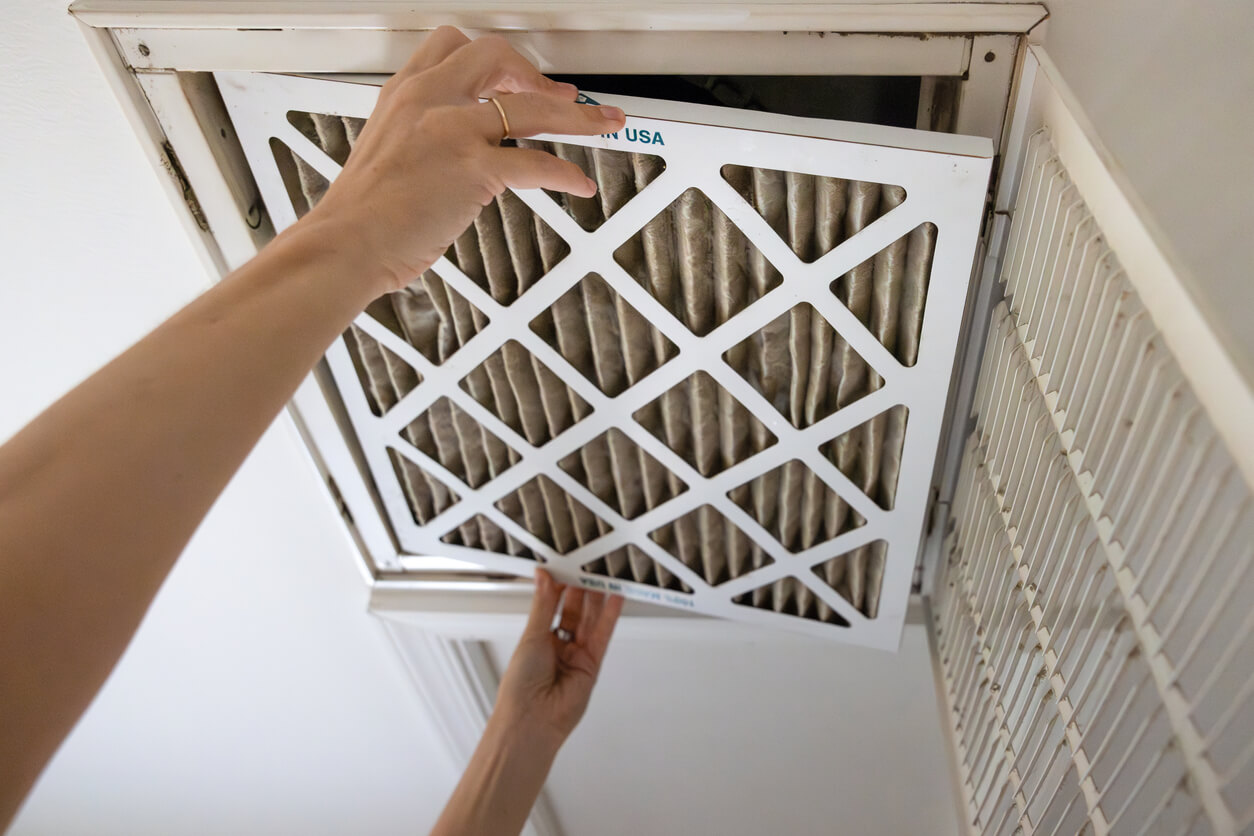
Visible Dirt Buildup: If you can see a layer of dust or discoloration on the filter, it’s time for a replacement. Check your filter monthly by pulling it out and holding it up to the light, if you can’t see through it, it needs changing.
Reduced Airflow: Notice that some rooms aren’t getting enough heated or cooled air? Decreased airflow from vents often signals a clogged filter forcing your system to work harder.
Increased Allergy Symptoms: If household members are experiencing more sneezing, congestion, or respiratory irritation, poor air filtration could be the culprit.
Higher Energy Bills: An unexplained spike in your utility costs may indicate your HVAC is working overtime to compensate for restricted airflow.
Excessive Dust: If you’re wiping down surfaces more frequently than usual, dust may be bypassing a saturated filter and recirculating through your home.
Special Considerations for Rural Michigan Homes
Living in areas like Otsego, Caledonia, and Allegnal comes with unique considerations that can affect your filter replacement schedule:
Seasonal Pollen: Spring and fall bring high pollen counts from trees, grasses, and agricultural crops. During these seasons, check your filter monthly and replace when visibly dirty.
Agricultural Dust: If you live near farms or working land, airborne dust and particles from field activities can clog filters faster than in suburban areas.
Wildfire Smoke: Even in Michigan, distant wildfires can impact air quality. During smoky periods, change filters more frequently to prevent fine particulates from circulating indoors.
Winter Conditions: While we focus on cooling during spring and summer, don’t neglect your filter during heating season. Forced-air heating systems rely on clean filters just as much as air conditioning units.
Tips for Maintaining Your HVAC Filter Schedule
Staying on top of filter changes doesn’t have to be complicated:
Set Calendar Reminders: Mark your calendar or set recurring smartphone alerts for filter checks. Even if you don’t need to replace it, a monthly inspection takes just a minute.
Write the Date on New Filters: Use a permanent marker to note the installation date directly on the filter frame. This makes it easy to track how long it’s been in use.
Buy Filters in Bulk: Purchase a six-month or one-year supply of filters so you always have replacements on hand. This removes the excuse of needing to make a special trip to the store.
Keep the Area Clean: Before installing a new filter, wipe down the surrounding area to prevent loose dust from being immediately drawn into the fresh filter.
Turn Off Your System: Always shut off your HVAC system before changing the filter to prevent unfiltered air from circulating during the swap.
Beyond Filters: Comprehensive HVAC Maintenance
While regular filter changes are crucial, they’re just one aspect of keeping your heating and cooling system in top condition. Bi-annual professional maintenance ensures that all components, from refrigerant levels to coils and heat exchangers, are functioning properly.
At ACR Heating & Cooling, we recommend scheduling maintenance visits before the cooling season begins in spring and before heating season starts in fall. These inspections catch small issues before they become major problems, extend the life of your equipment, and keep your system running at peak efficiency.
The Bottom Line on Filter Changes
Changing your HVAC filter is a simple task with significant impact on your comfort, health, and wallet. For most homes, starting with a 90-day replacement schedule and adjusting based on your specific circumstances works well. Watch for signs of a dirty filter between scheduled changes, and don’t hesitate to replace it more frequently if conditions warrant.
Remember that filter maintenance is an investment in your HVAC system’s longevity and your family’s comfort. Whether you’re cooling your home during Michigan’s warm summers or heating it through cold winters, a clean filter keeps everything running smoothly.
If you’re unsure which filter type is right for your system or need help with HVAC maintenance, the team at ACR Heating & Cooling is here to help. Serving Shelbyville, Middleville, Hastings, and surrounding communities since 1989, we’re committed to keeping your home comfortable year-round.